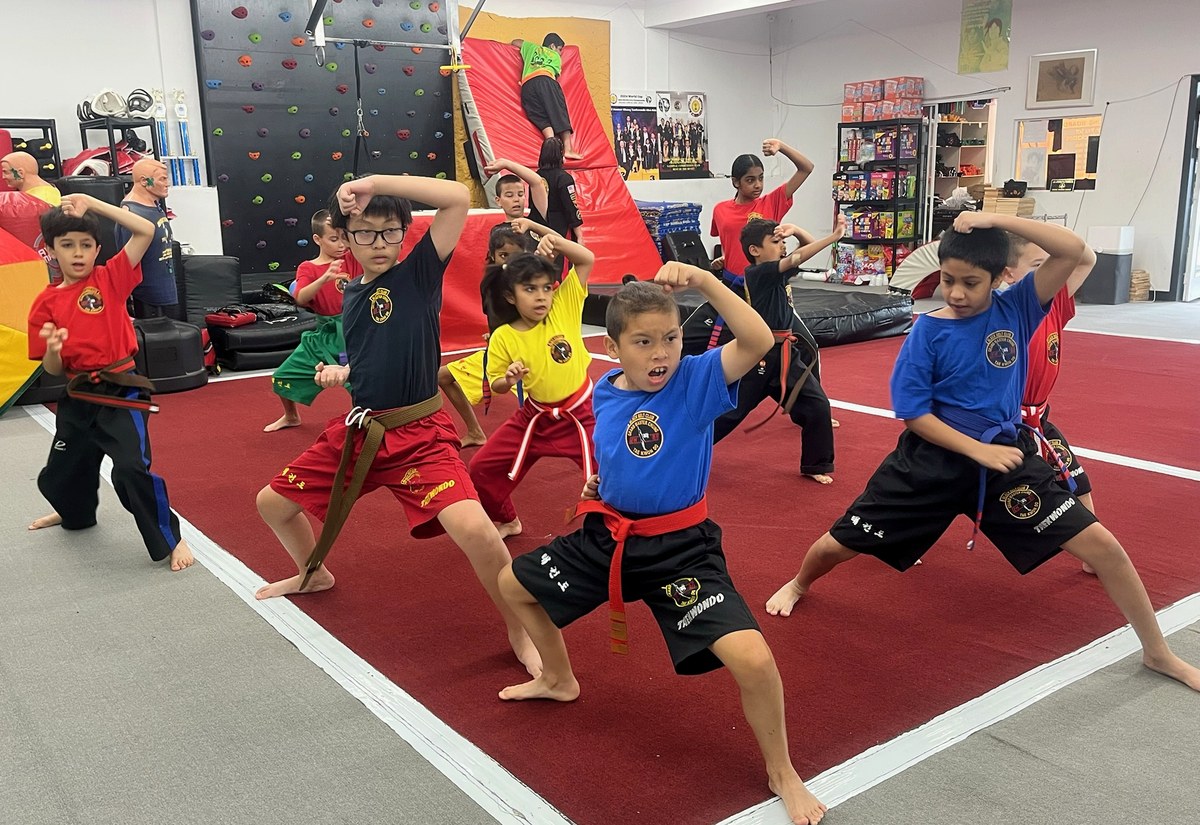
Tae Kwon Do belt order at Chung TKD
At Chung TKD, the nine belt colors, in order, are White, Gold, Orange, Green, Purple, Blue, Red, Brown and Black. Every child begins with a white belt.
Nine colors later, the same child has learned to stand still, to listen, to try again after getting it wrong, and to help a younger student tie a belt. The colors are the visible part. The habits are the point.
Why colors, and why nine
A child of six cannot picture “a year of practice.” They can picture the next color. Each belt marks a stage with its own expectations for attendance, forms, technique, sparring drills, breaking and terminology, expectations that grow with the child, so a gold belt at age five and a gold belt at age ten are not asked to do the same thing.
How long does a black belt take?
We don't publish a fixed timetable because children don't run on one. Between colors, instructors track progress in smaller steps. Your child's instructor will tell you how testing works when you visit.
What a parent can do at home
- Ask what the current belt's “big idea” is. There's always one, balance, focus, respect, and it's easy to notice at the dinner table.
- Let your child show you one thing, once. Correcting technique at home isn't your job; noticing effort is.
- Keep the belt where your child can see it. It's theirs.
- If a test is coming, ask the instructor what “ready” means for your child specifically. We'd rather defer a test than rush one.
What the black belt is, and isn't
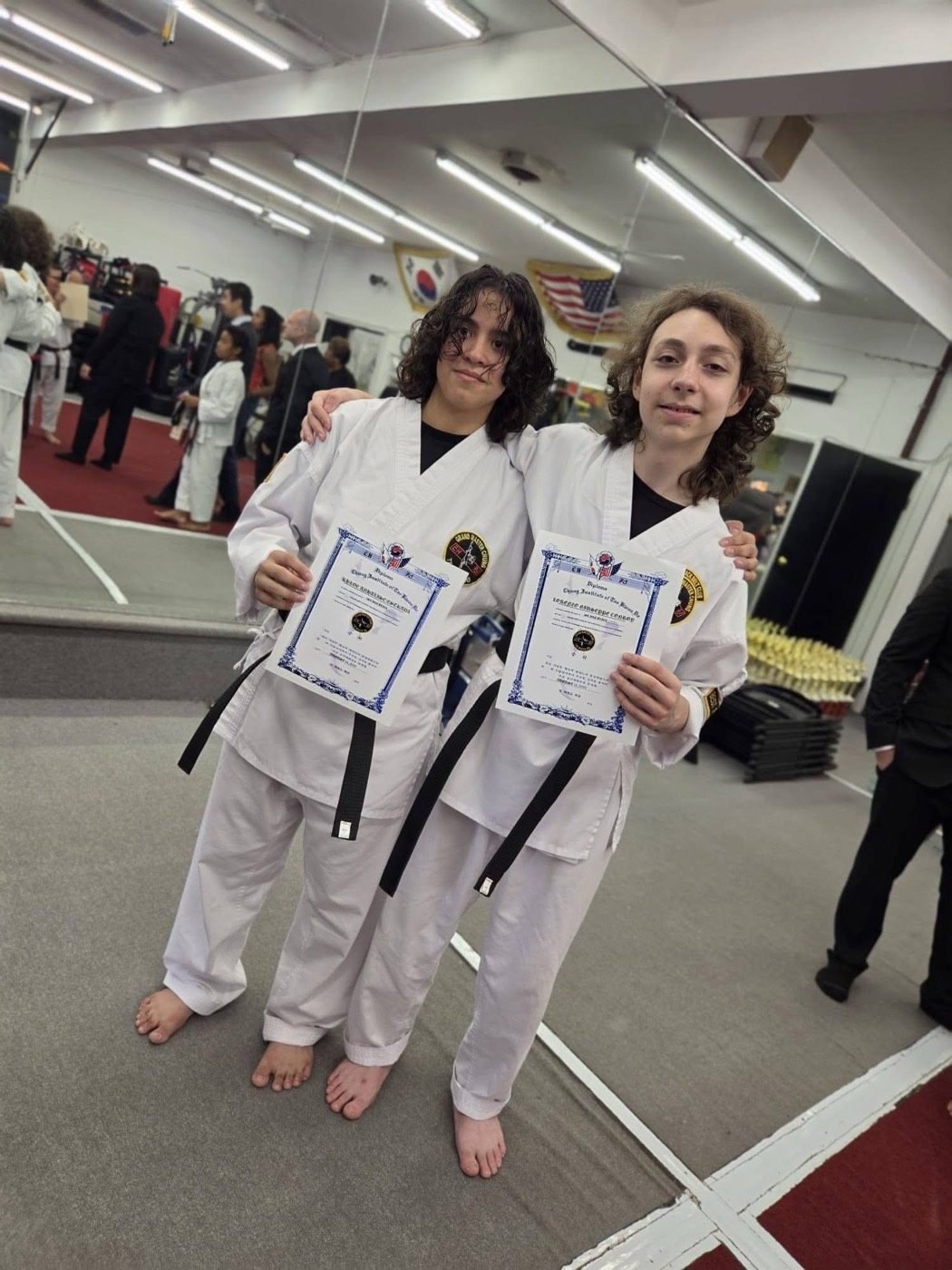
A black belt at Chung TKD is a beginning, not a finish line. It says a child can be trusted with harder work and with helping others. It doesn't say the child is done learning, nobody here is, including the instructors.
What are the Tae Kwon Do belt colors at Chung TKD?
At Chung TKD, the nine belt colors, in order, are White, Gold, Orange, Green, Purple, Blue, Red, Brown and Black.
How do belts work?
There are nine belt colors, from White to Black. Each marks a clear stage, and we’ll walk you through testing when you visit.